
Affiliate disclosure: TheTechVector earns a commission if you buy through links on this page, at no extra cost to you. Our recommendations are based on independent research — we are not paid to favour any brand or retailer. Learn more about how we make money.
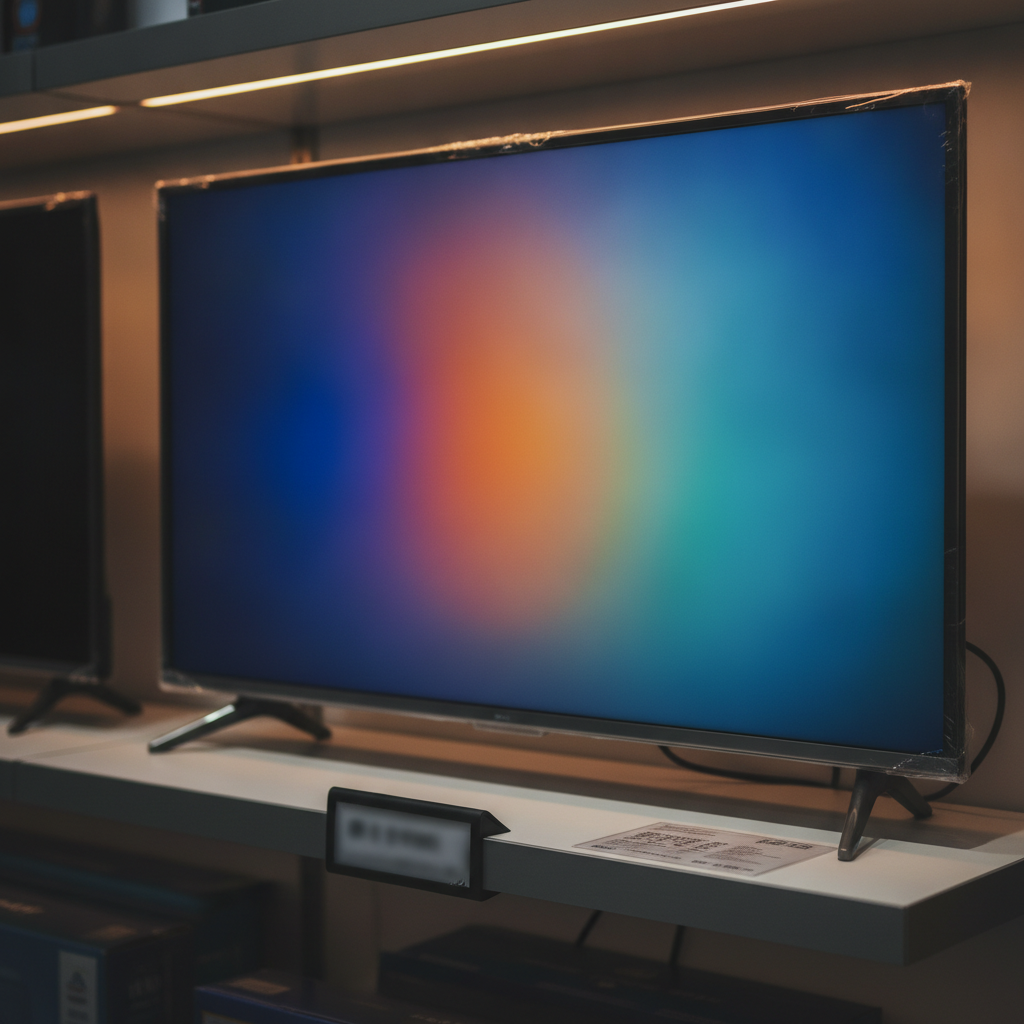
QLED vs LED is one of the most confusing labels you’ll see while shopping for a TV in India, because both sit on the same underlying technology — LCD — and the real gap between them is often much smaller than the sticker suggests. This guide explains exactly what each term means, when QLED genuinely earns its higher price in India, and when it’s just marketing on top of the same panel as a cheaper “LED” TV in the same shop.
Last updated: September 2026
Independently researched · No paid placements · Prices checked September 2026
QLED vs LED in one line: the quick answer
QLED is an LED-backlit LCD TV with an added quantum-dot film for wider colour and higher brightness — not a separate display technology, and not the same as OLED. In genuine premium sets (Samsung Neo QLED, Sony’s QLED range), that film is paired with proper mini-LED or full-array backlighting, and the upgrade is real. In budget Indian sets under roughly ₹40,000, “QLED” is often just a thin film on the same basic edge-lit panel used in a same-priced “LED” TV — so the real-world gain can be marginal. This isn’t the only confusing TV label in India right now — Android TV vs Google TV is another common mix-up worth clearing up before you shop.
What “LED TV” actually means (and why it’s a marketing simplification)
An “LED TV” is simply an LCD screen lit from behind by LED bulbs instead of the old CCFL tubes TVs used before roughly 2010. That’s the entire technical claim behind the label. Since virtually every LCD TV sold in India today uses LED backlighting, “LED TV” really just means “modern LCD TV” — it tells you almost nothing about picture quality on its own.
What actually varies is how those LEDs are arranged. Edge-lit panels place LEDs around the frame’s edges and spread light inward — cheaper, but weaker at controlling brightness in specific zones. Full-array or direct-lit panels sit LEDs behind the whole screen, allowing genuine local dimming — darker blacks in dark scenes without dimming the whole picture. Most budget Indian TVs, “QLED” or not, are edge-lit. That backlight arrangement, not the QLED sticker, is the bigger factor in how the picture actually looks.
What QLED adds — and why it’s still LCD, not OLED
QLED adds a quantum-dot film (QDEF) between the LED backlight and the LCD layer. This film re-emits light at more precise wavelengths, typically widening the colour gamut by around 20–30% over standard LED-LCD, according to industry figures — treat that as a general claim, not a lab-verified number for any specific model. Done properly, the result is richer colour and often higher peak brightness than a plain LED-LCD set.
Here’s the confusion that trips up a lot of Indian buyers: QLED is still fundamentally an LCD TV — it still needs a backlight shining through liquid crystals. OLED is a completely different, self-emissive technology: each pixel makes its own light and can switch off entirely, which is how OLED gets truly black blacks. QLED cannot do that; even the best QLED still only dims its backlight, it never switches individual pixels off. QLED and OLED are different technology families, and neither is a “better version” of the other’s name.
The India trap: budget “QLED” (₹20,000–₹40,000) is often just a thin film on a basic panel
This is the part most buying advice skips. Generic QLED explainers quote brightness figures of 1,000–2,000 nits, and premium Samsung QLED lines can exceed 2,000–4,000 nits. But our own spot-checks across India’s budget TV shelf (₹15,000–₹25,000) have repeatedly found real-world brightness closer to 300–600 nits — with some sets reading flat and washed-out even in HDR mode. That gap exists because these are thin-quantum-dot-film-on-edge-lit builds, not the full-array QLED panels the generic nit figures describe.
A few real examples make the point. The Thomson Phoenix 43″ QLED Google TV runs around ₹18,399 (Digit, April 2026); the Motorola 43″ QLED Google TV around ₹21,499 (Digit, April 2026); the Vu GloQLED 43″ around ₹23,499 (Digit, April 2026). Most tellingly, the Kodak SE 32QSE5080 carries a “QLED” badge on a 32-inch HD-resolution panel for around ₹8,499 (Digit, August 2026) — proof the label alone tells you almost nothing about what’s inside. Our ₹25,000 smart TV guide covers this same budget-QLED marketing pattern, with current picks that get the fundamentals right.
What actually matters more than the QLED label
At ₹20,000–₹40,000, four things tell you far more about real picture quality than whether the box says “QLED” or “LED.”
| Feature | What to check | Why it matters |
|---|---|---|
| Peak brightness | Nits figure in the spec sheet, if listed | Higher nits mean HDR content actually looks bright and punchy instead of flat |
| Local dimming zones | Zone count, or whether it’s edge-lit at all | More zones mean deeper blacks in dark scenes without dimming the whole picture |
| Panel type | VA or IPS, usually buried in the full spec sheet | Affects contrast versus viewing angle — see the trade-off below |
| HDR format support | HDR10, HDR10+, Dolby Vision | Determines whether streaming HDR content actually triggers the TV’s HDR mode |
Most budget listings in India don’t print nits or zone counts at all — that omission is itself a signal. If a retailer highlights “QLED” but stays silent on brightness and dimming zones, assume it’s a basic edge-lit panel with a colour film, not a meaningfully brighter TV.
When QLED genuinely is worth paying for in India
QLED earns its price when the quantum-dot film is paired with a backlight system that can actually use it — mini-LED or full-array local dimming with a real zone count, not a single edge-lit strip. Samsung’s 2026 Neo QLED (Mini LED) range starts around ₹42,990 for a 43-inch model, with the broader Neo QLED series (QN85D/QN90D/QN95D, 55-inch and up) starting around ₹52,990 and scaling with size (manufacturer launch pricing, accessed September 2026 — re-check the live price before buying). At this tier you genuinely get wider colour, higher sustained brightness, and local dimming that budget “QLED” sets don’t have the hardware for.
Timing the purchase also matters here — genuine premium QLED sets see their steepest discounts during India’s festive sale window, so check our festive sale TV deals guide before paying full price on a Neo QLED or equivalent.
Related confusions, quickly cleared up
IPS vs VA panel: a separate choice from QLED — either panel type can carry a quantum-dot film or not. VA panels give deeper blacks and better contrast but narrower viewing angles. IPS panels give wider, more consistent viewing angles but shallower blacks. For a TV watched mostly head-on, VA usually looks better; for a wide sofa with people sitting off-centre, IPS holds up more evenly.
AMOLED vs LCD: AMOLED is an OLED-family, self-emissive technology used almost exclusively in phone and smartwatch screens in India — it isn’t a term used for TVs here, and has nothing to do with QLED, which is LCD-based. If you’ve seen “AMOLED” while shopping for a TV, that’s a phone-shopping habit carrying over into the wrong category.
QLED vs 4K: completely independent specs. QLED is about the backlight and colour film; 4K is about resolution (3840×2160 pixels). A TV can be QLED and 4K, QLED and only Full HD (our own research has found sub-4K “QLED”-branded sets in India), or plain LED and 4K. Never assume “QLED” implies 4K — check resolution separately, every time.
So, which should you actually buy?
Spending ₹15,000–₹25,000
Ignore the QLED label at this budget and shop on nits, panel type, and HDR support instead — if two same-priced TVs both lack a nits figure, the “QLED” one isn’t reliably better than the “LED” one.
Spending ₹40,000–₹55,000
You’re now in the range where genuine mini-LED-backed QLED starts to appear. Check specifically for a stated zone count before paying the QLED premium — without it, you’re likely still buying an edge-lit panel with a colour film.
Spending ₹55,000 and above
Here QLED (Samsung Neo QLED, Sony’s QLED range) and OLED become genuine alternatives worth comparing on their own merits — both are well-implemented at this tier, and the choice comes down to prioritising brightness and colour (QLED) or perfect blacks and contrast (OLED).
Frequently asked questions
Is QLED better than LED?
QLED can be better than plain LED-LCD when paired with proper mini-LED or full-array backlighting, giving wider colour and higher sustained brightness. At India’s budget tier (₹20,000–₹40,000), though, “QLED” often just adds a colour film to the same edge-lit panel as a same-priced “LED” TV — check nits and dimming zones, not just the label.
Is QLED the same as OLED?
QLED and OLED are different technology families, not variations of the same thing. QLED is an LCD TV with a quantum-dot colour film, still lit by a backlight. OLED is self-emissive — each pixel makes its own light and switches off completely, giving it deeper blacks than any QLED can produce.
Is QLED worth the extra money in India?
QLED is worth the extra money in India when it comes with a real local-dimming backlight — typically from around ₹42,990 upward for genuine mini-LED ranges. Below that, a “QLED” TV at ₹20,000–₹40,000 is frequently a thin film on a basic edge-lit panel, and the same money is often better spent on a plain LED TV with higher stated brightness and more HDR support.
What is the difference between QLED and 4K?
QLED and 4K describe two independent specs. QLED refers to the backlight and colour-film technology; 4K refers to screen resolution (3840×2160 pixels). A TV can combine either with either — some budget “QLED” TVs sold in India are only Full HD, not 4K, so always check resolution separately from the QLED badge.
What is the best QLED TV under a given budget?
The best QLED pick at any budget changes month to month as prices shift, so we keep dedicated, regularly checked picks in our tier guides rather than naming one “winner” here — see our ₹15,000, ₹20,000 and ₹25,000 guides for current, sourced picks.
Does QLED last longer than LED?
QLED does not have a meaningfully different lifespan from plain LED-LCD, since both share the same LCD-and-backlight construction — the quantum-dot film doesn’t change how long the backlight or panel lasts. Real-world lifespan depends far more on build quality and usage conditions than on whether a TV is badged QLED or LED.
Is a budget QLED TV worth it over a better plain LED TV?
A budget QLED TV is often not worth it over a better-specified plain LED TV at the same price, because the QLED one may simply be an edge-lit panel with a colour film while the LED one has higher stated brightness or more HDR support. Compare nits, panel type, and dimming zones directly rather than trusting the QLED label to mean “better” by default.
IPS vs VA panel — which is better?
IPS panels are better for wide, consistent viewing angles across a crowded sofa, while VA panels are better for deeper blacks and contrast when most viewing happens head-on. Neither is universally “better” — VA usually wins for a single-viewer or darkened room, IPS for a wide seating arrangement. Both can be combined with a quantum-dot QLED film or not; panel type and QLED are independent choices.
Is AMOLED the same as QLED?
AMOLED is not the same as QLED and the two are unrelated. AMOLED is an OLED-family, self-emissive technology used almost exclusively in phone and smartwatch screens in India, not TVs. QLED is an LCD-based TV technology with an added quantum-dot colour film. If you’ve seen “AMOLED” while shopping for a television, it’s a phone-shopping term that doesn’t apply here.
How many local dimming zones does a TV need to matter?
A useful local-dimming setup generally needs at least a few dozen zones to visibly reduce blooming (light haloing around bright objects on a dark background) — a single edge-lit strip offers essentially none of this benefit. Most budget Indian TVs don’t publish a zone count at all, usually a sign there isn’t a meaningful one to publish; genuine mini-LED sets at ₹42,990 and up typically do state theirs.
Once you know what to check on the spec sheet, the shopping itself happens in our budget guides — see current, sourced picks in the ₹20,000 smart TV guide if you’re weighing entry 4K against a better Full HD set, or the ₹25,000 tier guide for models that pair the right backlight with the right panel.
Affiliate disclosure: This article contains affiliate links. TheTechVector may earn a commission if you purchase through these links, at no additional cost to you. As an Amazon Associate, we earn from qualifying purchases. We only recommend products we have researched independently. Prices correct at time of publication — always check the retailer’s site for the latest price. Last reviewed: 2026-09-12.

Written by Vaibhav Kulkarni
Vaibhav is the founder and technical editor of TheTechVector, with 15 years’ experience in quality engineering and software testing. He applies that background to auditing spec sheets, comparing price-to-performance, and checking hardware compatibility across our India laptop and TV buying guides. All prices are checked before publication — if something’s out of date, let us know.